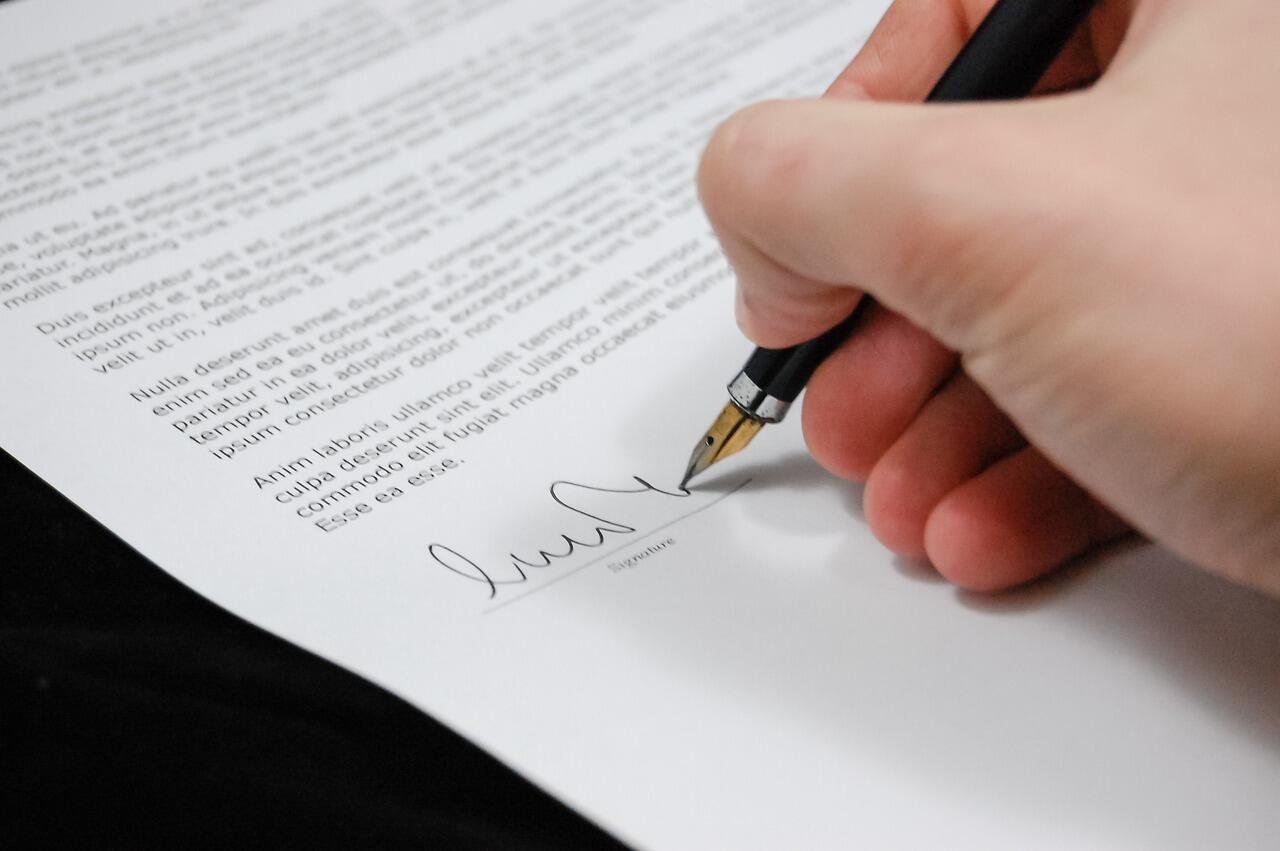
In this recent case between a parking management company (the employer) and its employee, the District Court Rotterdam ruled that the dismissal given during the probationary period was valid, even though the probationary clause had not been agreed in writing. That probationary dismissal was subsequently withdrawn with the employee’s consent, after which the employment contract nonetheless ended lawfully, because a condition subsequent was triggered – namely the absence of the required certificate of good conduct (VOG).
Facts
The employee joined the employer on 22 July 2024 as a legal assistant. The employment contract was sent to her via DocuSign on 18 July 2024, but she never signed it. She did start work on 22 July 2024, and on 1 August emailed the employer: “Given our renovation plans, I’m glad you will provide me with an employer’s statement and letter of intent after the probationary period on 13 August (if we continue working together). That means I am now considering signing (…).”
On 8 August 2024, the employer terminated the employee’s contract within the probationary period. Following the employee’s objection, the employer withdrew the probationary dismissal with her consent, after which she reported sick. Her sick pay was continued during the following period, while the employer maintained that the condition subsequent – requiring her to provide a valid certificate of good conduct before 30 September 2024 – remained fully applicable. The employee never provided a certificate of good conduct, as a result of which her employment contract still ended, lawfully, due to the fulfilment of that condition subsequent.
Ruling of the court
The court ruled as follows.
Valid probationary dismissal
The employee disputed that a valid probationary clause had been agreed when the employment contract was entered into, since she had never countersigned the written contract. The court ruled that the parties had indeed validly agreed a probationary period, and that in this specific case the failure to sign the contract did not affect the validity of the probationary clause. Before starting work, the employee had received the written contract, including the probationary clause, with a request to sign it, and she had started work without protest. In her correspondence, she had also acknowledged being aware of the probationary period and had not objected to its applicability afterwards either. In these circumstances, the subdistrict court held the probationary clause to be valid, and the employer had lawfully relied on it.
The subdistrict court further noted that, even if the probationary clause had not been valid, the employer would in this case be entitled to rely on Section 6:23(1) of the Dutch Civil Code. To the extent it should be assumed that, by failing to sign the contract, the employee could invoke the invalidity of the probationary clause, the subdistrict court held that reasonableness and fairness stood in the way of this, because the employee had an interest in not signing and had herself prevented the signing from taking place.
Withdrawal of the probationary dismissal
The subdistrict court ruled that the employer had lawfully withdrawn the (valid) probationary dismissal, with the employee’s consent, as a result of which the employment relationship revived (subject to the condition subsequent).
Condition subsequent
The employee’s contract included a condition subsequent requiring her to provide a certificate of good conduct by 30 September 2024 at the latest. The employer reminded her of this on several occasions and repeatedly asked her to obtain a valid certificate at the employer’s expense. Because the certificate was never provided, the court ruled that the employment contract between the parties had ended due to the fulfilment of the agreed condition subsequent.
All of the employee’s claims, including annulment of the dismissal, reinstatement, continued payment of wages, the transition payment, fair compensation and damages, were rejected. The employee was ordered to pay the employer’s legal costs.
Conclusion
This recent ruling of the subdistrict court in Rotterdam teaches us that, in certain specific cases, it is sufficient that an employee received the written employment contract before starting work, began work without objection, raised no objections to the probationary clause, and effectively acknowledged the probationary clause in written correspondence. The fact that the employment contract, and therefore the probationary clause, was not signed by the employee does not, in that case, affect the validity of the probationary clause.
Although a probationary dismissal cannot simply be withdrawn unilaterally by the employer, this can be done with the employee’s consent. In this case, the employee had indicated by email that she chose the option of “continuing the employment”, thereby consenting to the withdrawal.
The ruling also teaches us that employers can, in certain circumstances, rely on Section 6:23(1) of the Dutch Civil Code, for example where an employee deliberately refrains from signing a probationary clause in order to avoid its applicability. This provision can also be useful to consider in other situations, such as a non-compete clause, which likewise must be agreed in writing.
Even though the written-form requirement for a probationary clause can apparently be interpreted in different ways, it remains important for employers to let an employee start work only after the contract has been signed, in order to avoid a costly procedure.
Do you have questions about this topic, or would you like more detail on this ruling? Please feel free to contact our employment lawyers.
This case was handled by mr. E.M.Y. Sørensen and mr. M. Benard.